What is device binding, and how does it differ from holder binding?
Device binding ties a VC to one specific device so it cannot be transferred to another; unlike holder binding, it does not guarantee that the person using the device is the holder of the credential.
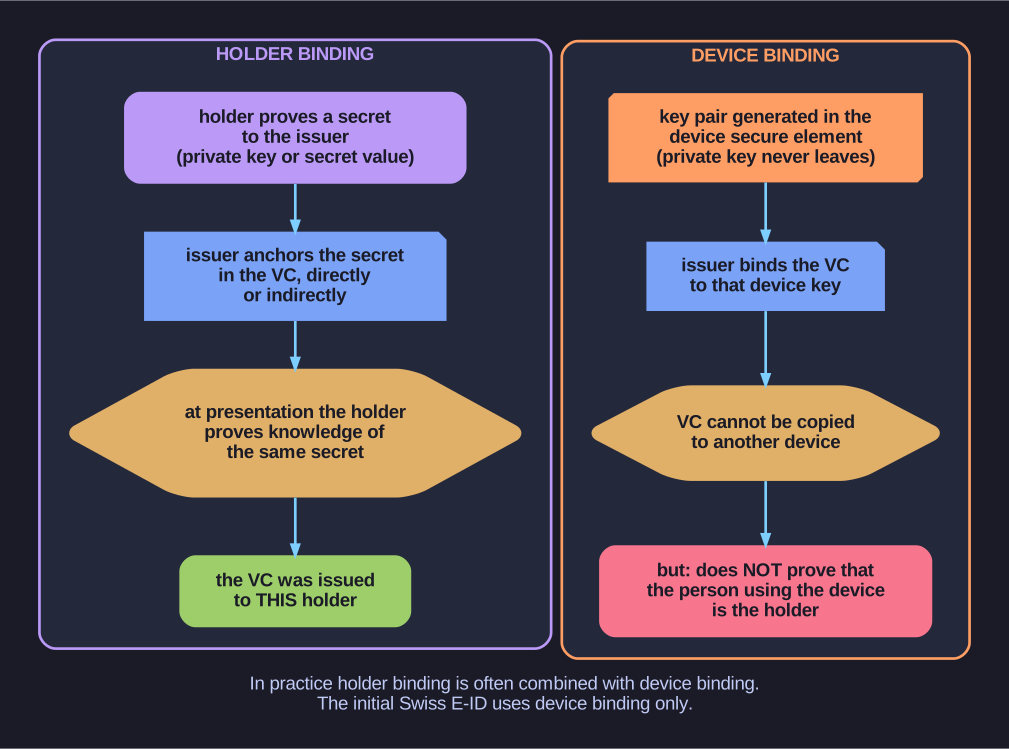
* Holder binding proves the VC belongs to this holder; device binding only proves it sits on this device. *
| Holder binding | Device binding | |
|---|---|---|
| Bound to | A secret the holder knows or controls | A specific device (e.g. a key in its secure element) |
| Prevents | Someone else presenting a copied VC | The VC being copied to another device |
| Proves | The presenter is the holder the VC was issued to | The presentation comes from the original device |
| Gap | Depends on the secret staying with the holder | Anyone who has the unlocked device can present |
The gap is the key point: device binding proves which phone, not which person. If you lend your unlocked phone to a friend, a purely device-bound credential will happily present itself for them. That is why holder binding is often layered on top, for example by requiring biometric unlock of the key.
The Swiss E-ID, in its initial version, offers device binding only (hardware-based when the smartphone supports it, otherwise software-based).
Go deeper:
 swiyu technical documentation — the Swiss E-ID's wallet and binding design.