Quiz Entry - updated: 2026.10.22
What happens step by step in phase 2 of Kerberos, the exchange between client and Ticket-Granting Server?
The client sends a TGS-REQ with the wanted service ID, its TGT and a fresh authenticator encrypted with the TGS session key; the TGS opens the TGT with the KDC key, takes the session key out, checks the authenticator, then returns a service ticket (encrypted with the service's key) plus a new service session key (encrypted with the TGS session key).
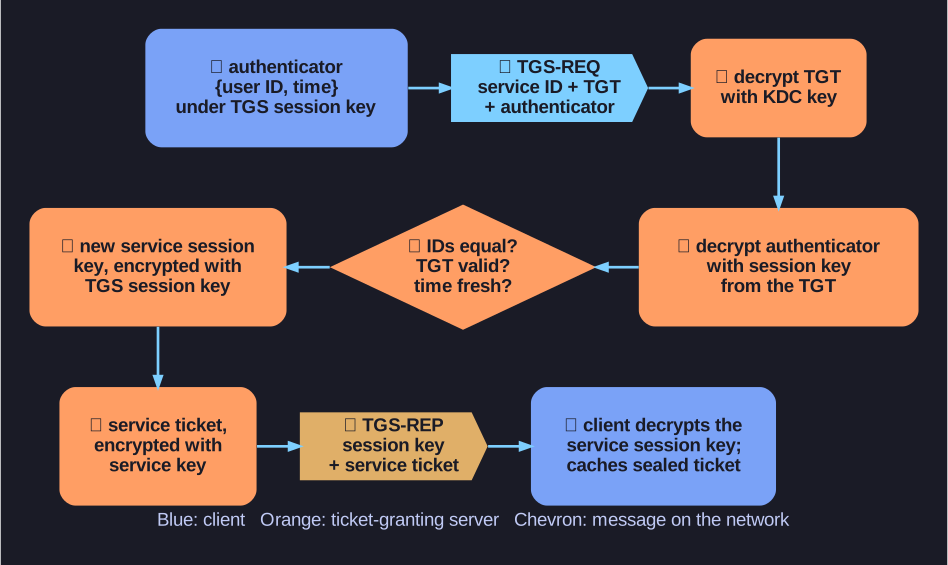
* Phase 2: the TGT replaces the password; the TGS needs no memory of phase 1. *
- The client creates an authenticator (user ID + timestamp) encrypted with the TGS session key from phase 1.
- It sends the TGS-REQ (Ticket Granting Service Request): service ID of the wanted service, desired lifetime, the authenticator and the TGT.
- The TGS decrypts the TGT with the KDC key.
- It decrypts the authenticator with the TGS session key found inside the TGT.
- It verifies everything: user ID in authenticator equals user ID in TGT, TGT still valid, timestamp fresh.
- It creates a random service session key and packs it with the service ID, a timestamp and the ticket's validity; this package is encrypted with the TGS session key.
- It creates the service ticket (user ID, service ID, timestamp, the service session key), encrypted with the service secret key from its service database.
- The client receives both (TGS-REP): it decrypts the package with the TGS session key and caches the service session key; the service ticket it caches still encrypted.
Go deeper:
 RFC 4120, Section 3.3: The Ticket-Granting Service exchange — TGS-REQ and TGS-REP and the checks on the TGT.