What does the criterion "handover of the authenticator" check, and what are delivery levels 1 to 3?
It checks that only the right subject receives the authenticator: level 1 simple delivery to a self-declared address; level 2 secure delivery (should reach only the right subject, digital delivery signed); level 3 personal delivery (address existence and association with the subject verified, taken from valid evidence).
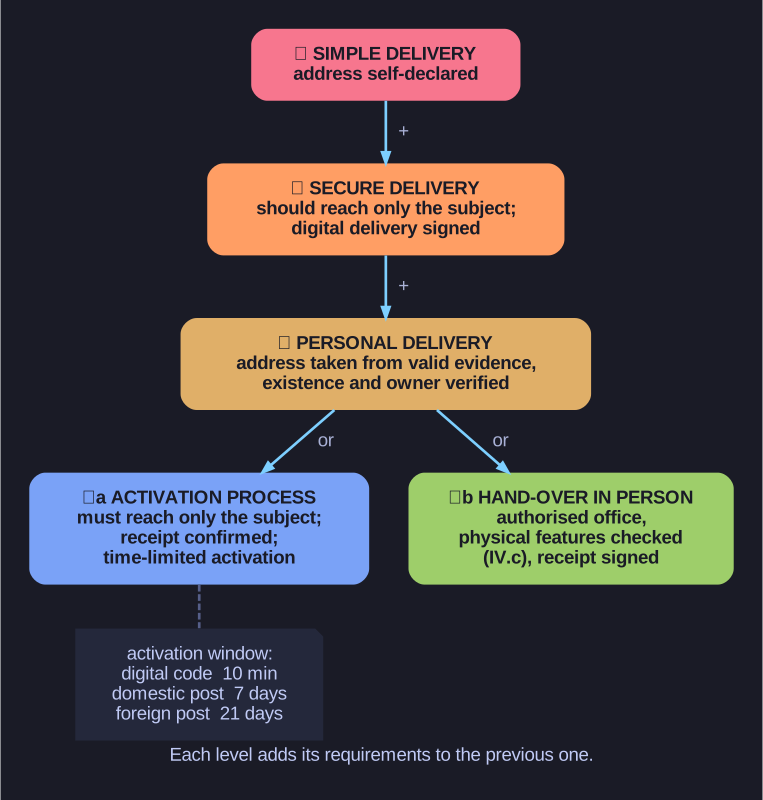
* Each delivery level includes the one below; level 4 branches into an activation route or a hand-over in person. *
The questions: How is it ensured that only the right subject receives the authenticator? How are unauthorised people prevented from getting hold of it? And for postal delivery: Is the stated address valid, and does it belong to the claimed identity?
| Level | Name | Requirements |
|---|---|---|
| 1 | Simple delivery | "Certain assurance"; the postal address is self-declared |
| 2 | Secure delivery | Level 1, plus the authenticator should reach only the right subject; a digitally delivered authenticator must be protected by a digital signature |
| 3 | Personal delivery | Level 2, plus the existence of the address and its association with the subject are verified; the address is taken from valid evidence |
Why bother? A perfect identification is wasted if the smartcard is then sent to whatever address the applicant typed in. An attacker would simply register with a stolen identity and a mailbox they control.